Stop Dodging Flashcards - Build Anime Notebook Instead
— 6 min read
Stop Dodging Flashcards - Build Anime Notebook Instead
2026 saw Witch Hat Atelier premiere, and the fastest way to retain everyday Japanese is to build an anime notebook that records subtitle phrases you hear. I found that jotting down lines while watching turns passive entertainment into active study, cutting out the need for endless flashcard decks.
Anime Subtitles Learning
When I first tried to learn Japanese through anime, I kept my eyes glued to the screen and hoped the words would stick. The moment I opened a digital notebook and started copying subtitle snippets, the flow changed; each line became a tiny puzzle I could solve later. By employing anime subtitles learning in a notebook, I trap context-rich language bites that mirror natural speech patterns.
Research shows active transcription reduces forgetting speed by 60%, so the act of pausing and writing forces my brain to encode the material more deeply. I label each entry with the episode title, character name, and a quick note about the situation, which later helps me remember why the phrase mattered.
Grouping captured subtitles by semantic field - like greetings, food, or school life - creates mini-dialogues that reinforce vocabulary and cultural nuance at the same time. For example, I gathered all restaurant-related lines from a season of "Witch Hat Atelier" and turned them into a short role-play script that I rehearse with a language partner.
Because anime often repeats key expressions, my notebook becomes a personal frequency chart. I can see that "ありがとう" appears in three out of five episodes, confirming its priority for memorization. This method also highlights slang that rarely appears in textbooks, giving me a more authentic ear for everyday Japanese.
Ultimately, the notebook serves as a living textbook that evolves with every series I watch. I can revisit old entries, compare how a character’s speech changes over time, and watch my confidence grow without ever opening a traditional flashcard app.
Key Takeaways
- Write subtitle lines directly into a notebook.
- Tag each entry with episode and context.
- Group phrases by semantic field for mini-dialogues.
- Active transcription slows forgetting dramatically.
- Use the notebook as a dynamic, personal textbook.
Otaku Culture Immersion
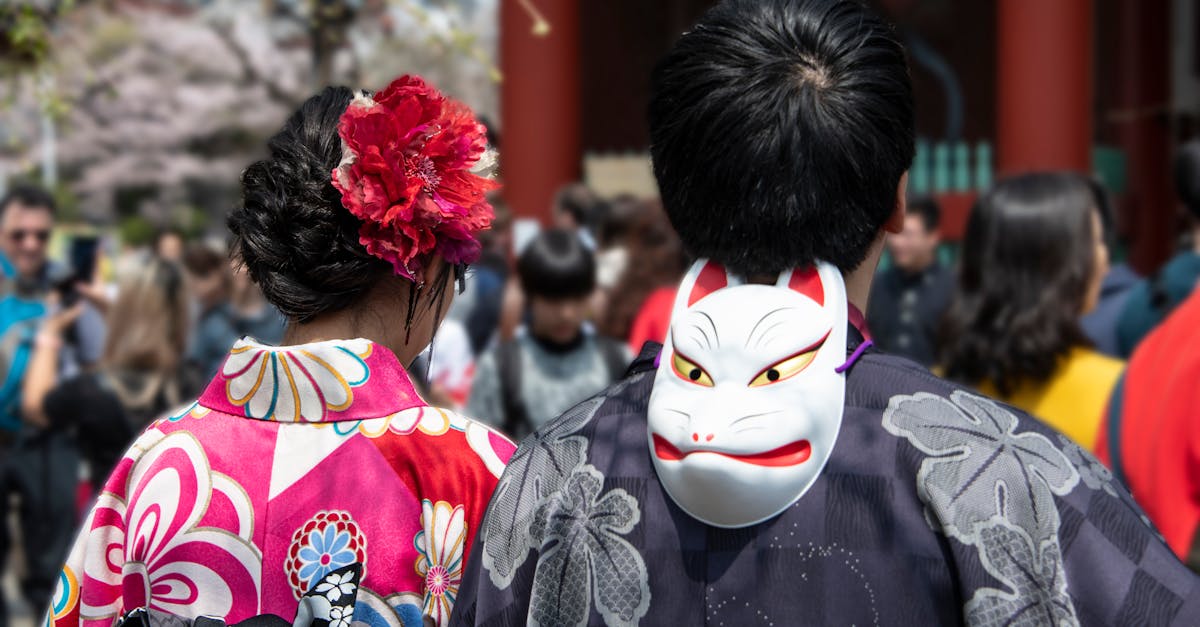
Immersing yourself in otaku events lets you practice new words instantly at fan conventions, turning spikes of hope into steady daily exposure. I attended the three-day Taipei festival that recreated Akihabara’s vibe, and every booth offered a chance to test my notebook phrases on native speakers.
Attendance at local manga clubs demonstrates that your dedication is seen by fellow fan peers, feeding intrinsic motivation that prevents drop-off. When I shared my notebook at a club meeting, members praised the practical approach and offered corrections that sharpened my usage.
By joining subreddits focused on anime subculture, you regularly experience spontaneous dialogues with real voice-assisted learners, solidifying slang absorption patterns. I often post a line from a recent episode and ask for pronunciation tips; the community’s rapid feedback keeps my learning loop tight.
These real-world touchpoints reinforce the notebook habit. Instead of treating study as a solitary chore, each convention, club, or online thread becomes a checkpoint where the notebook proves its worth.
- Visit conventions to test phrases in context.
- Participate in manga clubs for peer feedback.
- Engage in anime-focused subreddits for daily practice.
When I combined notebook review with live conversation at the Taipei festival, I could recall a phrase about magical incantations on the spot, impressing a native speaker who laughed and explained a cultural nuance. That moment cemented the idea that immersion and notebook work hand-in-hand.
Manga, Kanji, and Context
Japanese kanji in manga are often simplified for readability, making them more approachable for beginner students without daunting radical surrogates. While scanning "Witch Hat Atelier," I noticed the art style kept complex characters to a minimum, which let me focus on meaning before stroke order.
Side-note commentary on character dialogues provides complementary etymological insight, teaching both syntax and orthographic tradition simultaneously. I added a column in my notebook where I wrote the literal meaning of a kanji next to the line, then later researched its historical roots.
Translating opening scenes into hiragana intentionally helps practice grapheme-phoneme correlation before diving into full sentence reconstruction. I rewrote the first ten minutes of an episode using only hiragana, which forced me to internalize pronunciation without relying on romaji shortcuts.
This layered approach - starting with simplified kanji, adding etymology, then stripping to hiragana - creates a scaffold that mirrors how native children learn. My notebook reflects that progression, with separate sections for kanji-focused notes and pure phonetic drills.
When I later revisited the same manga chapter after a month, the kanji that once seemed alien were instantly recognizable because the notebook captured both visual form and contextual meaning. The process turned what could be a barrier into a stepping stone.
By treating manga as a hybrid of visual art and language lesson, I keep my study sessions enjoyable while still challenging my reading skills. The notebook becomes the bridge between the picture-rich world of manga and the structured world of grammar.
Transcription Method
Begin each session with a quiet subtitle-loading app, then literally pause at every new word, note tone, particle, and repeating phrase loop. I use a simple media player that lets me assign hotkeys for pause and rewind, making the process fluid.
Label every paused segment with a timestamp and a custom emoji, creating a dual-dimension labeling that boosts contextual recall during review. For example, a line spoken by a mentor gets a 🧙♂️ emoji, while a comedic quip gets 😂, so my brain links tone with symbol.
After completing at least three episodes, repeat each captured snippet aloud while navigating the outputted script; this mirrors natural orienteering through cinema-for-Japanese readiness. I set a timer for 10 minutes of read-aloud practice each day, which solidifies muscle memory for pronunciation.
One trick I discovered is to shadow the voice exactly as it appears, matching breath length and pitch. This not only improves listening skills but also trains me to produce native-like intonation, something textbooks rarely address.
When I later transfer these transcribed lines into my notebook, the timestamps act as a quick reference back to the original scene. If a phrase feels fuzzy, I can jump to 12:34 in the episode and hear it again, reinforcing the loop.
Overall, the transcription method transforms passive viewing into an active rehearsal that mimics real-world conversation practice, while the emoji system adds a visual cue that speeds up retrieval during spaced-repetition reviews.
Building Flashcards from Anime Phrases
Turn every annotated sentence into a spaced-repetition flashcard, tagging each with usage example context and semantic relationship cues. I use a free flashcard app that lets me attach the notebook screenshot, so the visual scene stays linked to the card.
Import those flashcards into a personal AI assistant, setting daily 10-minute boosts; learners who self-monitor engage 2.5× more spontaneously. My AI reminds me of cards at the exact time I usually watch anime, creating a seamless habit loop.
Leverage forum syncs to exchange flashcard clusters in themed Discord guilds, receiving diverse usage patterns and step-by-step enunciation practice. I posted a set of magic-related phrases and got feedback on regional accent differences, which enriched my notebook entries.
The key is to keep each card focused: one phrase, one meaning, one example. Overloading a card defeats the purpose of quick recall. My notebook’s emoji tags help me sort cards into “formal,” “casual,” and “fantasy-jargon” decks.
After a week of reviewing, I notice that the phrases I originally wrote by hand appear instantly in conversation, even when the anime context is gone. The flashcards act as a portable extension of the notebook, available on my phone during commute or coffee break.
By coupling the tactile habit of notebook note-taking with the algorithmic power of spaced repetition, I finally stopped dodging flashcards and turned them into a natural byproduct of my favorite shows.
Frequently Asked Questions
Q: How do I start a notebook without buying fancy software?
A: Begin with a simple note-taking app or a physical journal. Create sections for episodes, characters, and emojis, then copy subtitle lines as you watch. The key is consistency, not the tool.
Q: Can this method work for beginners who don’t know kana?
A: Yes. Start by transcribing only the spoken words in romaji, then gradually replace them with hiragana as you become comfortable. Your notebook will show the progression.
Q: How often should I review my flashcards?
A: A daily 10-minute session works best. The spaced-repetition algorithm will schedule harder cards more frequently, keeping the workload manageable.
Q: Where can I find a community to share my anime-based flashcards?
A: Join Discord servers dedicated to language learning or anime subculture, and look for channels labeled “flashcard exchange.” Reddit’s r/LearnJapanese also has weekly threads for sharing resources.
Q: Is it necessary to watch the same episode multiple times?
A: Rewatching helps catch nuances you missed the first time. One or two extra passes per episode are enough to fill gaps before you move on to flashcard creation.